Phase field lattice Boltzmann method for liquid-gas flows in complex geometries with efficient and consistent wetting boundary treatment
Abstract
This study investigates the application of wetting boundary conditions for modelling flows in complex curved geometries, such as rough fractures. It implements and analyses two common variants of the wetting boundary condition within the three-dimensional (3D) phase field lattice Boltzmann method. It provides a straightforward and novel extension of the geometrical approach to curved three-dimensional surfaces. It additionally implements surface-energy approach. A novel interpolation-based mitigation of the staircase approximation for curved boundaries is then developed and consistently applied to both wetting boundary conditions. The objectives of simplicity and parallel compute efficiency in implementation are emphasised. Through detailed validation on a series of 3D benchmark cases involving curved surfaces, such as droplet spread on a sphere, capillary intrusion, and droplet impact on a sphere, the behaviour of the wetting boundary conditions are validated and the differences between methods are highlighted. To demonstrate the applicability of the proposed approach in complex geometries with varying surface curvatures, two-phase flow through a synthetic rough fracture is presented. The suitability of the methods for complex simulations is also verified by comparing the computational performance between all investigated methods using this fracture flow test case. The present work thus contributes to the field of multiphase flow modelling with the lattice Boltzmann method in realistic applications where addressing the impact of complex geometries is essential.
Development and validation of a phase-field lattice Boltzmann method for non-Newtonian Herschel-Bulkley fluids in three dimensions
Abstract
The behaviour of non-Newtonian fluids, and their interaction with other fluid phases and components, is of interest in a diverse range of scientific and engineering problems. In the context of the lattice Boltzmann method (LBM), both non-Newtonian rheology and multiphase flows have received significant attention in the literature. This study builds on that work by presenting the development and validation of a phase-field LBM which combines these features in three-dimensional flows. Specifically, the model presented herein combines the simulation of Herschel-Bulkley fluids, which exhibit both a yield stress and power-law dependence on shear rate, interacting with a Newtonian fluid. The developed model is verified and validated using a diverse set of rheological properties and flow conditions, which in their totality represent an additional contribution of this work. Comparison with steady-state layered Poiseuille flow, where one fluid is Newtonian and the other is non-Newtonian, showed excellent correlation with the corresponding analytic solution. Validation against analytic solutions for the rise of a power-law fluid in a capillary tube also showed good correlation, but highlighted some sensitivity to initial conditions and high velocities occurring early in the simulation. A demonstration of the model in a microfluidic junction highlighted how non-Newtonian rheology can alter behaviour from cases where only Newtonian fluids are present. It also showed that significant changes in behaviour can occur when making small and smooth changes in non-Newtonian parameters. To summarise, this work broadens the range of physical phenomena that can be captured in computational analysis of complex fluid flows using the LBM.
Quantifying non-API proppant transport and fracture permeability as a function of solids loading and particle shape
Abstract
The use of non-API proppant in hydraulic fracturing has the potential to significantly reduce the cost of hydraulic fracturing operations. However, the influence of particle angularity on proppant transport in rough fractures is not well understood. This work utilises direct numerical simulation (DNS) to quantify changes in fracture permeability as a function of proppant aspect ratio, solid volume fraction, and fracture width. High-fidelity simulations of proppant transport through realistically-textured fractures were conducted using an established numerical framework based on the lattice Boltzmann method and discrete element methods. Particle angularity was captured via clumps of overlapping spheres and the fracture surfaces were described by a power spectral density. The results show that fracture permeability, which is a proxy for injection pressure, smoothly decreases with increasing proppant concentration for all proppant and fracture characterisations. No distinct screen-out was observed, irrespective of particle shape, which contradicts the prevailing assumption that screen-out instantaneously occurs at some threshold of proppant concentration and fracture width. Interestingly, the change in fracture permeability with particle angularity was found to be non-monotonic (decreasing, then increasing, and then decreasing again). It is hypothesized that increases in permeability are a result of the preferential alignment of particles with the flow streamlines. This requires further investigation, along with the analysis of more complex clump shapes such as triangles and tetrahedra. The developed permeability-concentration curves clearly show the influence of particle angularity on injection pressure and can be used to help inform operational decision making when non-API proppant is proposed in reservoir stimulation.
Revisiting the second-order convergence of the lattice Boltzmann method with reaction-type source terms
Abstract
This study analyses an approach to consistently recover the second-order convergence of the lattice Boltzmann method (LBM), which is frequently degraded by an improper discretisation of the required source terms. The current work focuses on advection-diffusion models, in which the source terms are dependent on the intensity of transported fields. Such terms can be observed in reaction-type equations used in heat and mass transfer problems or multiphase flows. The investigated scheme is applicable to a wide range of formulations within the LBM framework. All considered source terms are interpreted as contributions to the zeroth-moment of the distribution function. These account for sources in a scalar field, such as density, concentration, temperature or a phase field. Further application of this work can be found in the method of manufactured solutions or in the immersed boundary method. This paper is dedicated to three aspects regarding proper inclusion of the source term in LBM schemes. Firstly, it identifies the differences observed between the ways in which source terms are included in the LBM schemes present in the literature. The algebraic manipulations are explicitly presented in this paper to clarify the observed differences, and to identify their origin. Secondly, it analyses in full detail, the implicit relation between the value of the transported macroscopic field, and the sum of the LBM densities. This relation is valid for any source term discretization scheme. It is a crucial ingredient for preserving the second-order convergence in the case of complex source terms. Moreover, three equivalent forms of the second-order accurate collision operator are presented. Finally, closed form solutions of this implicit relation are shown for a variety of common models, including general linear and second order terms; population growth models, such as the Logistic or Gompertz model and the Allen-Cahn equation. The second-order convergence of the proposed LBM schemes is verified on both linear and non-linear source terms. The pitfalls of the commonly used acoustic and diffusive scalings are identified and discussed. Furthermore, for a simplified case, the competing errors are shown visually with isolines of error in the space of spatial and temporal resolutions.
Hydrodynamic clogging of micro-particles in planar channels under electrostatic forces
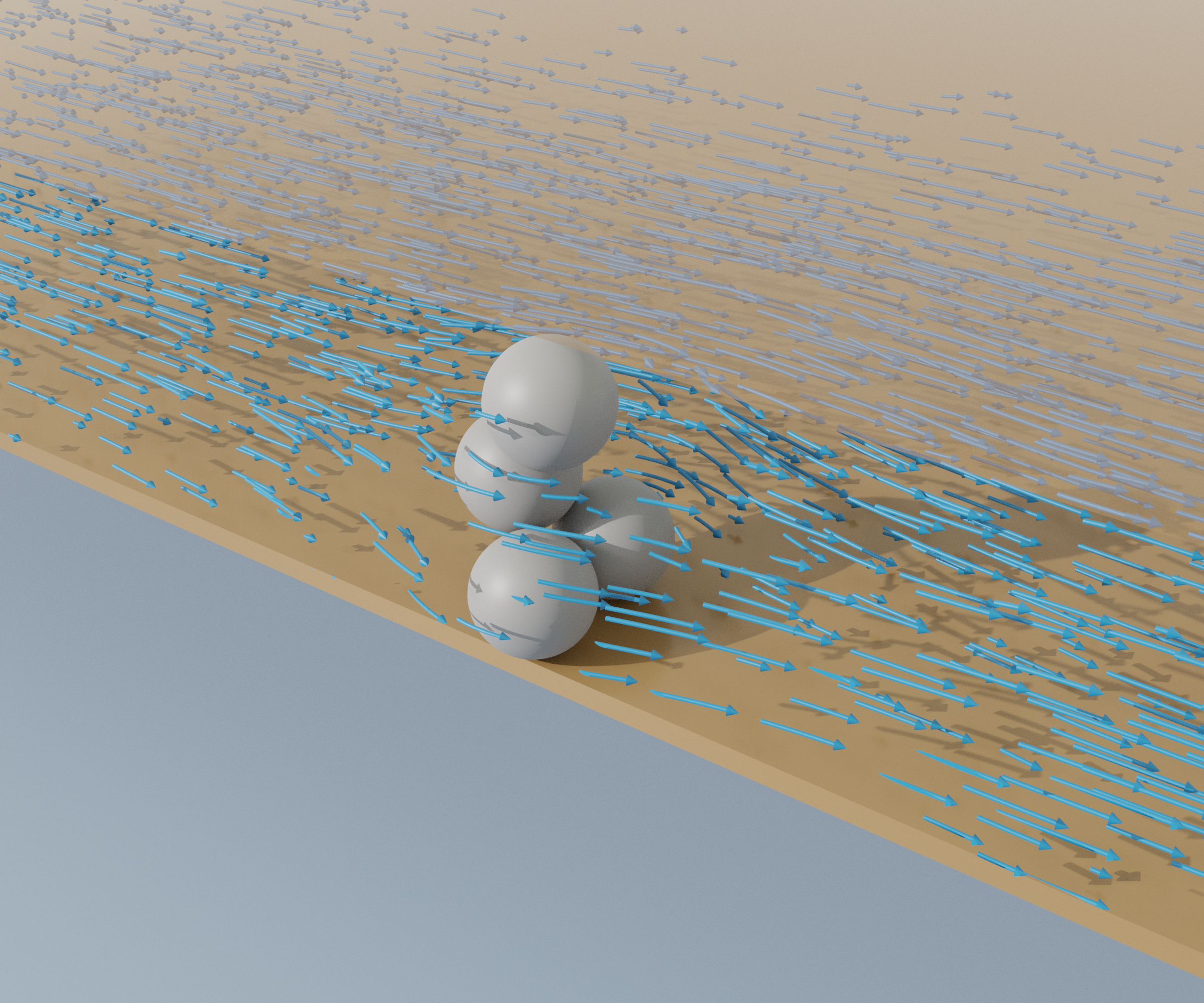
Particle clogging can occur in any scenario where a flow path or constriction is small relative to the size of objects trying to pass through it - think of flow through silos, blood flows through needles, and even the evacuation of crowds through barrieres. It originates from the formation of a single arch, behind which an entire flow path can become blocked. This work is the first time hydrodynamic clogging has been thoroughly investigated in planar channels. We also studied the effects of electrostatic forces, which become significant for micro-particles.
Quantifying the Permeability Enhancement from Blast-Induced Microfractures in Porphyry Rocks Using a Cumulant Lattice Boltzmann Method
Abstract
The permeability of rocks is important in a range of geoscientific applications, including CO 2 sequestration, geothermal energy extraction, and in situ mineral recovery. This work presents an investigation of the change in permeability in porphyry rock samples due to blast-induced fracturing. Two samples were analysed before and after exposure to stress waves induced by the detonation of an explosive charge. Micro-computed tomography was used to image the interior of the samples at a pixel resolution of 10.3μm. The images were segmented into void, matrix, and grain to help quantify the differences in the rock samples. Following this, they were binarised as void or solid and the cumulant lattice Boltzmann method (LBM) was applied to simulate the flow of fluid through the connected void space. A correction required with the use of inlet and outlet reservoirs in computational permeability assessment was also proposed. Interrogation of the steady-state flow field allowed the pre- and post-loading permeability to be extracted. Conclusions were then drawn as to the effectiveness of blasting for enhancing fluid accessibility via the generation of microfractures in the rock matrix within the vicinity of a detonated charge. This paper makes contributions in three fundamental areas relating to the numerical assessment of permeability and the enhancement of fluid accessibility in low-porosity rocks. Firstly, a correction factor was proposed to account for the reservoirs commonly imposed on digitised rock samples when investigating sample permeability through numerical methods. Secondly, it validates the benefits of the LBM in handling complex geometries that would be intractable with conventional computational fluid dynamics methods that require body-fitted meshing. This is done with a novel implementation of the cumulant LBM in the open-source TCLB code. Finally, the improvement in fluid accessibility in low-permeability rock samples was shown through the assessment of multiple regions within two blasted samples. It was found that the blast-induced loading can generate extended microfractures that results in multiple orders of magnitude of permeability enhancement if the target rock possesses existing weaknesses and/or mineralisation.
Computational Analysis of Proppant Transport and Screen-Out in Natural and Induced Fractures
Abstract
Predicting the pressure drop (or, equivalently, the effective permeability) across a fracture due to proppant injection is integral to the design of hydraulic fracturing treatments. This theoretical study investigates the relationship between permeability and proppant solid volume fraction, φ, for synthetic rough fractures via direct numerical simulation. For high aperture widths, it is found that permeability decreases in accordance with the cubic law with viscosity adjusted to that of a suspension. This is commensurate with what is currently employed in commercial hydraulic fracturing simulators. Moreover, permeability decreases with increasing fracture roughness. In narrow fractures, however, the permeability deviates further due to arching and localised clogging. However, screen-out, or complete fracture clogging, does not occur instantaneously. Instead, fracture permeability decreases as a continuous function of increasing φ, with gradually-increasing arching and localised clogging. The current binary criteria used by hydraulic fracturing simulators, which model a discontinuous jump in permeability at some φ, are therefore not reflective of the reality of particle transport in rough fractures because they grossly under-predict the permeability. Instead of the existing apparent viscosity and binary screen-out models, the permeability decline curves which are presented in this work should be incorporated into simulators as corrections to the cubic-law fracture permeability.
Probabilistic Quantification of Size Segregation and Screen-Out of Microparticles Subject to Electrostatic Forces
Abstract
A growing number of hydraulic fracturing stimulation treatments rely solely on the deployment of 100-mesh (i.e. 150μm) proppant. Further, these may be preceded by post-pad injection of microparticles (i.e. 5-75μm) with the intent of activating natural fractures. The objective of this work is to describe fundamental new insights on the behaviour of polydisperse microparticle suspensions in hydraulic fractures in terms of screen-out and leak-off. This study was undertaken using a high-fidelity computational model of suspension transport based on the lattice Boltzmann method (for fluid mechanics) and discrete element method (for particle mechanics). The approach has been previously validated against analytical solutions and experimental data for suspension flows in channels, and applied to study fundamental aspects of size segregation and clogging (i.e. screenout) of microproppant. This fully-resolved modelling approach captures two-way hydrodynamic coupling, electrostatic interactions, fracture roughness and tortuosity, and non-Newtonian fluid rheology. The sole assumption of significance is that particles are assumed to be perfectly spherical. One of the challenges of deploying micron-scale proppant in hydraulic fracturing stimulation treatments is poor control of the particle size distribution. This inevitably results in a proportion of the injected proppant being small enough to be susceptible to electrostatic (rather than just mechanical and hydrodynamic) forces. This study clearly demonstrates the increased probability of screen-out that results as a consequence of electrostatic particle-particle and particle-wall interactions, and shows how this effect reduces as the minimum particle size increases. Analysis of particle leak-off off into transverse cleats also demonstrated how the combination of cleat width and particle size result in the formation of occlusions at cleat intersections, the reduction of leak-off rates in cleats, and the retardation of proppant transport in the primary fracture. These findings are significant because tight size control is not economically feasible for microproppant, and so hydraulic fracture engineering must accommodate their characteristic behaviours. This will result in more effective stimulation of coalbeds, but is applicable to all jobs where small proppant is proposed for injection into natural fracture systems.
Towards a Statistical Framework to Upscale Fracture Flows with Quantifiable Uncertainty
Abstract
Modelling of single- and multi-phase flow in fractured subsurface systems is critical in applications relating to the environment, energy, and resource extraction. However, techniques for quantifying the effect of fracture characteristics such as roughness and wettability, as well as fluid flow regimes, on hydraulic properties (e.g., relative permeability) are not described in the literature. Often fractures are approximated as parallel plates (at some level of locality), ignoring intrinsic roughness and decorrelation between surfaces. This leads to the well-known Cubic or Local Cubic Law for single-phase flow, of which many modifications have been proposed to cater for various pore-scale flow phenomena. Although there is a wide range of available literature working within such a methodology, the realisation of a general, robust model based on expected properties of the fracture surface remains a challenge. In comparison, two-phase fracture flows see significantly less development in the literature, with only few studies characterising permeability-saturation curves as a function of fracture properties. Roughness and wettability impact pore-scale flow and can lead to earlier transition between various displacement regimes and govern the relative permeability of the fluid phases present in a fracture. This work aims to develop a framework for studying the impact of fracture-scale phenomena and upscaling it to the level of Discrete Fracture Networks, and then into field-scale analysis. This talk will provide examples of the studies conducted for single- and two-phase flow at the fracture-scale and discuss the methodology of upscaling the observed behavior while quantifying the uncertainty introduced by fracture characteristics (e.g., topology, wettability).
A comparative study of 3D cumulant and central moments lattice Boltzmann schemes with interpolated boundary conditions for the simulation of thermal flows in high Prandtl number regime
Abstract
Thermal flows characterized by high Prandtl number are numerically challenging as the transfer of momentum and heat occurs at different time scales. To account for very low thermal conductivity and obey the Courant-Friedrichs-Lewy condition, the numerical diffusion of the scheme has to be reduced. As a consequence, the numerical artefacts are dominated by the dispersion errors commonly known as wiggles. In this study, we explore possible remedies for these issues in the framework of lattice Boltzmann method by means of applying novel collision kernels, lattices with large number of discrete velocities, namely D3Q27, and a second-order boundary conditions. For the first time, the cumulant-based collision operator is utilised to simulate both the hydrodynamic and the thermal field. Alternatively, the advected field is computed using the central moments’ collision operator. Different relaxation strategies have been examined to account for additional degrees of freedom introduced by a higher order lattice. To validate the proposed kernels for a pure advection-diffusion problem, the numerical simulations are compared against analytical solution of a Gaussian hill. The structure of the numerical dispersion is shown by simulating advection and diffusion of a square indicator function. Next, the influence of the interpolated boundary conditions on the quality of the results is measured in the case of the heat conduction between two concentric cylinders. Finally, a study of steady forced heat convection from a confined cylinder is performed and compared against a Finite Element Method solution. It is known from the literature, that the higher order moments contribute to the solution of the macroscopic advection-diffusion equation. Numerical results confirm that to profit from lattice with a larger number of discrete velocities, like D3Q27, it is not sufficient to relax only the first-order central moments/cumulants of the advected field. In all of the performed benchmarks, the kernel based on the two relaxation time approach has been shown to be superior or at least as good as counter-candidating kernels.
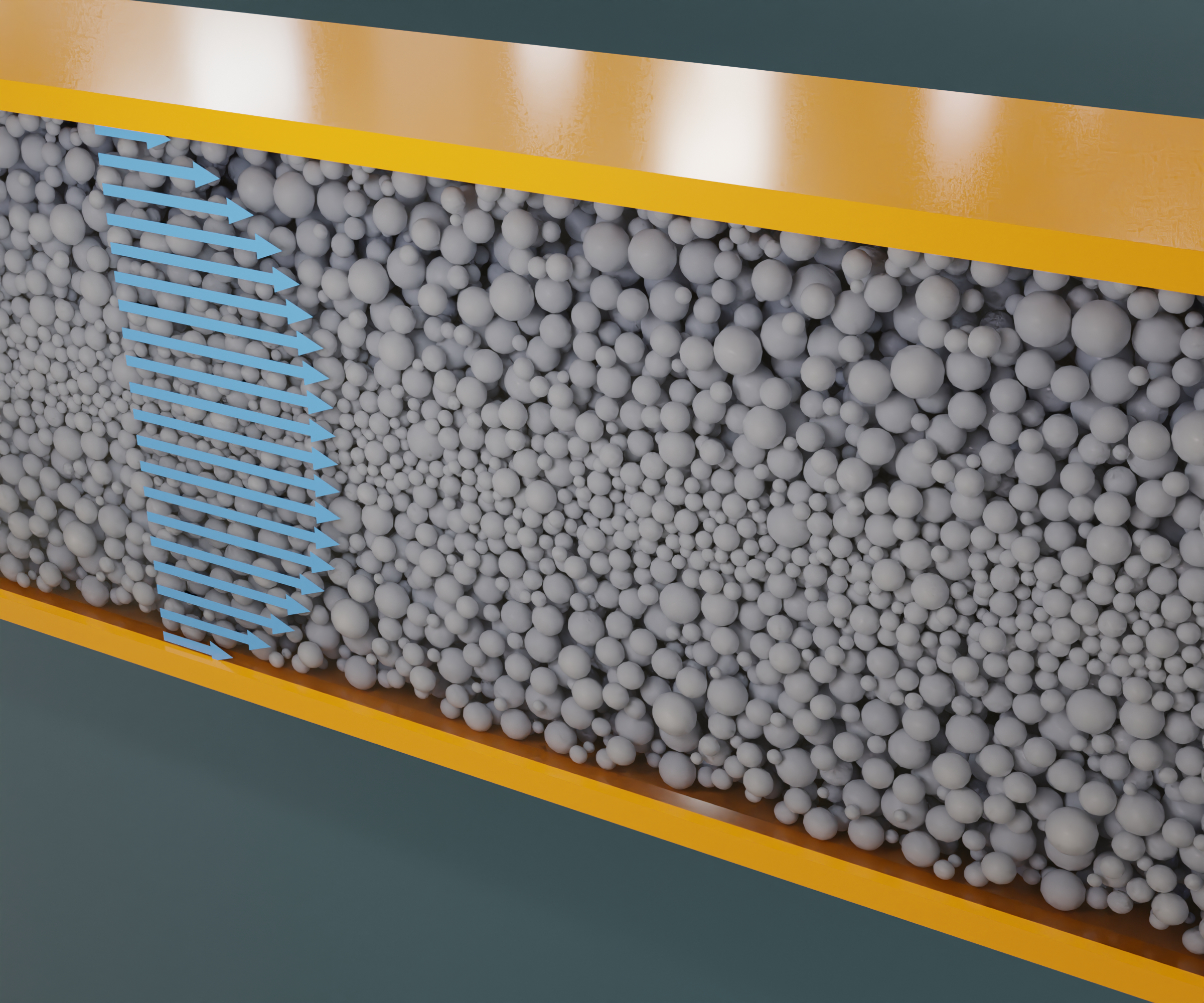
Influence of particle polydispersity on bulk migration and size segregation in channel flows
In this work we investigated the phenomenon of shear-induced migration for polydisperse suspensions for the first time. Shear-induced migration is basically the diffusion of particles in the direction of decreasing shear rate, caused by the accumlation of random particle collisions in sheared flows. In channels, it results in the accumulation of particles at the channel centre and a flattening of the velocity profile. These concepts have long been established and investigated for monodisperse suspensions (all particles of the same size), and some works have even investigated bidisperse suspensions (particles of two different sizes), demonstrating that the larger particles preferentially migrate towards the channel centre.
A 3D LBM-DEM study of sheared particle suspensions under the influence of temperature-dependent viscosity
Abstract
Particle suspensions form a fundamental yet complex component of many scientific and engineering endeavours. This paper proposes a numerical coupling between the lattice Boltzmann and discrete element methods that resolves particle suspensions exposed to thermal influences due to temperature-dependent fluid viscosity and conjugate heat transfer between components. Validation of the model was performed via the study of the relative viscosity of suspensions. This numerically corroborated the proposed temperature-dependence of the relative viscosity of suspensions. The model was finally used to interrogate the macroscopic behaviour of sheared suspensions at a range of solid volume fractions. This demonstrated changes in suspension flow behaviour due to temperature related effects. Future work based on these results would examine how particle properties could be modified to exacerbate and control temperature-based phenomena potentially leading to improvements in domains such as industrial material processing and manufacture.
A Novel Methodology for Predicting Micro-Proppant Screenout in Hydraulic Fracturing Treatments
Abstract
Screenout of micro-proppants in narrow fractures is a significant issue for this emerging stimulation technique, however the predictive tools currently used in hydraulic fracturing simulators are inadequate. This work investigates screenout using numerical simulations. Data from the numerical test cell is translated to regions of screenout, which are dependent on the proppant solid volume fraction, ø, and the ratio of fracture width to proppant diameter, w/d. The dependence on w/d which is demonstrated is commensurate with existing bridging modelling. The method of numerical simulation, however, allows further insight into the underlying mechanisms of screenout, namely collision frequency and bridge stability. Incorporation of the screenout regions into a hydraulic fracturing simulator significantly improves the current industry standard of using a threshold of w/d = 2.5, at similar computational cost during the hydraulic fracture simulation. The screenout regions can be readily reproduced for any desired modification of parameters, such as friction, by modifying the numerical simulations. This is done here in the presence of electrostatics, and is the first time a methodology has been presented which can incorporate electrostatic parameters into screenout predictions of hydraulic fracturing simulators. Overall, the methodology significantly improves the efficacy of screenout predictions by considering the underlying parameters.
Aerodynamic Shape Optimization of a Gas Turbine Engine Air-Delivery Duct
Abstract
We discuss a methodology for multiobjective optimization of the U-shaped air-delivery duct, which is a part of a turboprop engine intake system. The methodology combines and extends existing techniques to optimize the real-world engineering problem efficiently. The procedure utilizes Kriging models for the approximation of objective functions. We use the Expected Hypervolume Improvement method for improving the Kriging models accuracy and creating the Pareto front. The calculations are parallel and asynchronous, allowing to reduce the time needed for finding the optimal designs. The algorithm is resistant to solver failures and mesh issues. We perform the optimization with a purpose to satisfy two objectives: reduction of a total pressure loss across the duct and improvement/not-worsening of a distortion coefficient at the duct outlet. To obtain the improvement, we modify the shape of the duct within limits to fulfill geometric constraints. We use 30 design variables to control the deformation of the duct surface based on radial basis function interpolation.
Open-loop optimal control of a flapping wing using an adjoint Lattice Boltzmann method
Abstract
We present the usage of an adjoint Lattice Boltzmann Method (LBM) for open-loop control of two-dimensional flapping wing motion. Movement of the wing is parametrised with periodic B-Splines, while the wing interacts with the surrounding flow via an Immersed Boundary (IB) method. Multi-objective optimisation is performed using a gradient optimisation algorithm, for which sensitivities are calculated with an adjoint method. The objectives selected were the mean lift force and mechanical power. To achieve performance suitable for optimisation, we also present an efficient GPU implementation of the LBM and adjoint LBM. The Immersed Boundary approach employed for the LBM is verified against results from the literature, while for the flapping case it is compared with two different Finite Volume Method (FVM) approaches. The obtained Pareto front of optimal designs shows a clear discrepancy between the power consumption and the mean lift force. A significant improvement of the basic wing design is demonstrated, and highlights the applicability of adjoint LBM simulations in complex open-loop control problems.
A cascaded phase-field lattice Boltzmann model for the simulation of incompressible, immiscible fluids with high density contrast
Abstract
In this work, a conservative phase-field model for the simulation of immiscible multiphase flows is developed using an incompressible, velocity-based, cascaded lattice Boltzmann method (CLBM). Extensions are made to the lattice Boltzmann (LB) equations for interface tracking and incompressible hydrodynamics, proposed by Fakhari et al. [1], by performing relaxation operations in central moment space. This was motivated by the work of Fei et al. [2,3], where promising results from such a transformation were observed. The relaxation of central moments is defined in a reference frame moving with the fluid, while the existing multiple-relaxation time [4,5] scheme performs collision in a fixed frame of reference. Moreover, the derivations make use of continuous, Maxwellian distribution functions. As a result, the CLBM enhances the Galilean invariance and stability of the method when high lattice Mach numbers are evident. The cascaded scheme has been previously used in the literature to simulate multiphase flows based on the pseudo-potential model, where it allowed for high density and viscosity contrasts to be captured [6,7]. Here, the CLBM is implemented within the phase-field framework and is verified through the analysis of a layered Poiseuille flow. The performance of the CLBM is then investigated in terms of spurious currents, Galilean invariance and computational efficiency. Finally, the work of Fakhari et al. [1] is extended by validating the model’s ability to capture the relation between surface tension and the rise velocity of a planar Taylor bubble, in both stagnant and flowing fluids. New counter-current results indicate that the rise velocity model of Ha-Ngoc and Fabre [8] also applies in this regime.
Hydrodynamic and electrostatic jamming of microparticles in narrow channels
Abstract
In fluid-driven particulate flows through channels, jamming occurs when static bridges of particles form as the channel becomes narrow relative to the particle size. For micro-sized particles, however, the significance of electrostatics relative to hydrodynamics must be considered. The present work develops a numerical framework based on the inclusion of DLVO theory in fully-resolved lattice Boltzmann method-discrete element method (LBM-DEM) simulations. Strong dependence of jamming on the ionic strength of the fluid medium is demonstrated. Further, continuous functions are fit to the probabilistic jamming data, representing a novel approach to predicting the onset of jamming compared to existing empirical models.
Towards a stochastic model of the permeability of rough fractures
Abstract
This paper presents the construction of a surrogate statistical model for the permeability tensor of a random self-affine fracture. The model is constructed from thousands of flow simulations performed with the Lattice Boltzmann Method on GPUs, using the Generalised Additive Models for Location Scale and Shape (GAMLSS). To achieve good accuracy at acceptable cost, the constructed model uses information from simulations at different fidelities. The results show substantial divergence from the commonly-assumed cubic law and high variability of the permeability for mismatched surfaces.
Robust optimization with Gaussian process models
Abstract
In this chapter, the application of the Gaussian regression models in the robust design and uncertainty quantification is demonstrated. The computationally effective approach based on the Kriging method and relative expected improvement concept is described in detail. The new sampling criterion is proposed which leads to localization of the robust optimum in a limited number of steps. The methodology is employed to the optimal design process of the intake channel of the small turboprop engine.
Second-order derivatives for geometrical uncertainties
Abstract
The paper presents a method for handling geometrical uncertainties. In this case, discretization of continuous uncertainty field leads to a large set of correlated uncertainties/random variables. In order to reduce dimensionality of the problem, the authors propose a method that takes advantage of both the probabilistic information (covariance) and the local behavior of the objective (up to a second-order derivatives). The proposed method is verified for the UMRIDA BC-03 test case (UMRIDA Consortium, Test case description innovative database for UQ and RDM, 2014). The method is shown to outperform the Karhunen-Loeve decomposition and the analysis based purely on the Hessian matrix. The method allows to keep the same level of accuracy with a significant reduction of the number of uncertainties.
Shape optimisation method based on the surrogate models in the parallel asynchronous environment
Abstract
This paper proposes a new optimisation method, the Parallel Asynchronous Surrogate Model (PASM) method, which is based on the surrogate models approximation and takes advantage of the asynchronous, parallel processing threads. Additionally, it introduces the Cornering technique (PASM+C), which by using values from the corners of the design space provides a rapid drop of the value of the objective function and a significant reduction of the processing time. An overview and characteristics of the main reference optimisation methods, like Particle Swarm Optimisation PSO and Genetic Algorithm (GA), is presented, together with the results of the computer experiments involving optimisation of the generic car body shape. Significant attention is devoted to the time and computational effort needed for drag minimization by using different optimisation schemes. Finally, the benefits and limitations of the proposed methods are discussed together with their potential impact on the optimisation process workflow.
A Kriging-assisted multiobjective evolutionary algorithm
Abstract
A surrogate-assisted (SA) evolutionary algorithm for Multiobjective Optimization Problems (MOOPs) is presented as a contribution to Soft Computing (SC) in Artificial Intelligence (AI). Such algorithm is grounded on the cooperation between a “pure” evolutionary algorithm and a Kriging based algorithm featuring the Expected Hyper-Volume Improvement (EHVI) metric. Comparison with state-of-art pure and Kriging-assisted algorithms over two- and three-objective test functions have demonstrated that the proposed algorithm can achieve high performance in the approximation of the Pareto-optimal front mitigating the drawbacks of its parent algorithms.
Single component multiphase lattice boltzmann method for taylor/bretherton bubble train flow simulations
Abstract
In this study long bubble rising in a narrow channel was investigated using multiphase lattice Boltzmann method. The problem is known as a Bretherton or Taylor bubble flow [2] and is used here to verify the performance of the scheme proposed by [13]. The scheme is modified by incorporation of multiple relaxation time (MRT) collision scheme according to the original suggestion of the author. The purpose is to improve the stability of the method. The numerical simulation results show a good agreement with analytic solution provided by [2]. Moreover the convergence study demonstrates that the method achieves more than the first order of convergence. The paper investigates also the influence of simulation parameters on the interface resolution and shape.
Adjoint Lattice Boltzmann for topology optimization on multi-GPU architecture
Abstract
In this paper we present a topology optimization technique applicable to a broad range of flow design problems. We propose also a discrete adjoint formulation effective for a wide class of Lattice Boltzmann Methods (LBM). This adjoint formulation is used to calculate sensitivity of the LBM solution to several type of parameters, both global and local. The numerical scheme for solving the adjoint problem has many properties of the original system, including locality and explicit time-stepping. Thus it is possible to integrate it with the standard LBM solver, allowing for straightforward and efficient parallelization (overcoming limitations typical for the discrete adjoint solvers). This approach is successfully used for the channel flow to design a free-topology mixer and a heat exchanger. Both resulting geometries being very complex maximize their objective functions, while keeping viscous losses at acceptable level.
Comparison between pure and surrogateassisted evolutionary algorithms for multiobjective optimization
Abstract
In this paper, a comparison between a “pure” genetic algorithm (GeDEA-II) and a surrogate-assisted algorithm (ASEMOO) is carried out using up-to-date multiobjective and multidimensional test functions. The experimental results show that the use of surrogates greatly improves convergence when both two- and three-objective test cases are dealt with. However, its convergence capabilities depend on how the surrogate can have an accurate picture of the fitness function landscape and seem to decrease as the number of the objective increases from two to three. On the other hand, a pure genetic algorithm always assures a minimum level of “front coverage”, regardless of the problem on hand. Such minimum level could be considered sufficient for real-life problem optimizations. Also The dimensionality of the design space affects in opposite directions the two algorithms: for ASEMOO the increase of dimensionality is detrimental on performance, while GeDEA-II experiences benefits due to total amount of direct evaluations. It seems that GeDEA-II has an optimal population size around 20, regardless the dimensionality of the problem at hand.
Pressure drop in flow across ceramic foams-A numerical and experimental study
Abstract
The unique properties of ceramic foams make them well suited to a range of applications in science and engineering such as heat transfer, reaction catalysis, flow stabilization, and filtration. Consequently, a detailed understanding of the transport properties (i.e. permeability, pressure drop) of these foams is essential. This paper presents the results of both numerical and experimental investigations of the morphology and pressure drop in 10. ppi (pores per inch), 20. ppi and 30. ppi ceramic foam specimens with porosity in the range of 75-79%. The numerical simulations were carried out using a GPU implementation of the three-dimensional, multiple-relaxation-time lattice Boltzmann method (MRT-LBM) on geometries of up to 360 million nodes in size. The experiments were undertaken using a water channel. Foam morphology (porosity and specific surface area) was studied on post-processed, computed tomography (CT) images, and the sensitivity of these results to CT image thresholding was also investigated. Comparison of the numerical and experimental data for pressure drop exhibited very good agreement. Additionally, the results of this study were verified against other researchers[U+05F3] data and correlations, with varying outcomes.